Locate the real listing
Use the sheet to reach the product page, then confirm the listing is active and the shown price belongs to the variation you actually want.
A curated Superbuy spreadsheet experience with real product pages, practical QC checks and evidence-led shipping preparation.
Every category opens the matching collection on KakobuyMake, so shoppers land where the label promises.
Prices are catalog snapshots and may change. Open any card to inspect its product page and available agent links.
 01
01 02
02 03
03 04
04 05
05 06
06 07
07 08
08 09
09 10
10Estimate a planning range and run a structured QC review without leaving the page.
Use weight, destination and parcel shape to build a budget before warehouse packing.
This is an editorial planning tool, not an official Superbuy quote. Final options depend on measured weight, dimensions, destination, item restrictions and current carrier rates.
Turn warehouse photos into a decision trail instead of relying on a quick glance.
Superbuy describes two payment stages: product plus domestic delivery first, then international shipping after warehouse consolidation.
Open the product page, compare options, examine seller details and avoid treating a spreadsheet link as proof of quality.
Pay the item price and Chinese domestic shipping. The buying agent purchases the item and receives it at the warehouse.
Superbuy currently states that three free QC photos are provided. Request measurements when the standard views cannot answer a material question.
Combine eligible warehouse items, choose packaging and an available route, then pay the international shipping deposit.
Every guide opens as a complete article, and the full archive keeps all new and historical buyer guides visible.
A buyer-first assessment of what the service controls, where costs appear and which risks still belong to the buyer.
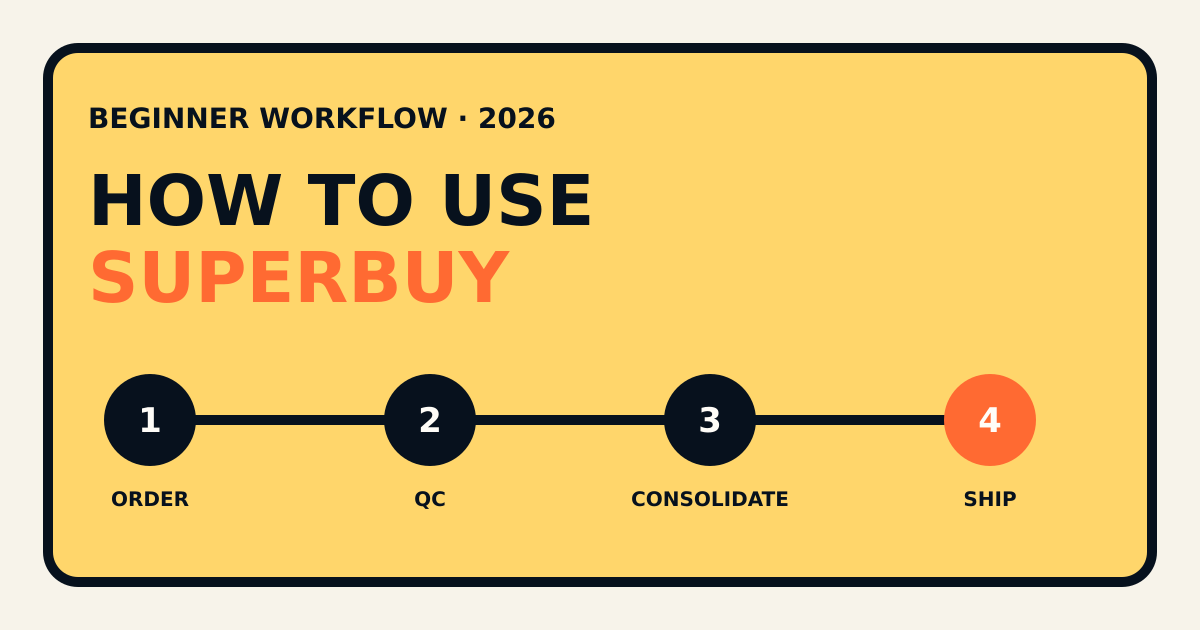
A complete workflow connecting listing checks, warehouse QC, deadlines, parcel planning and delivery evidence.
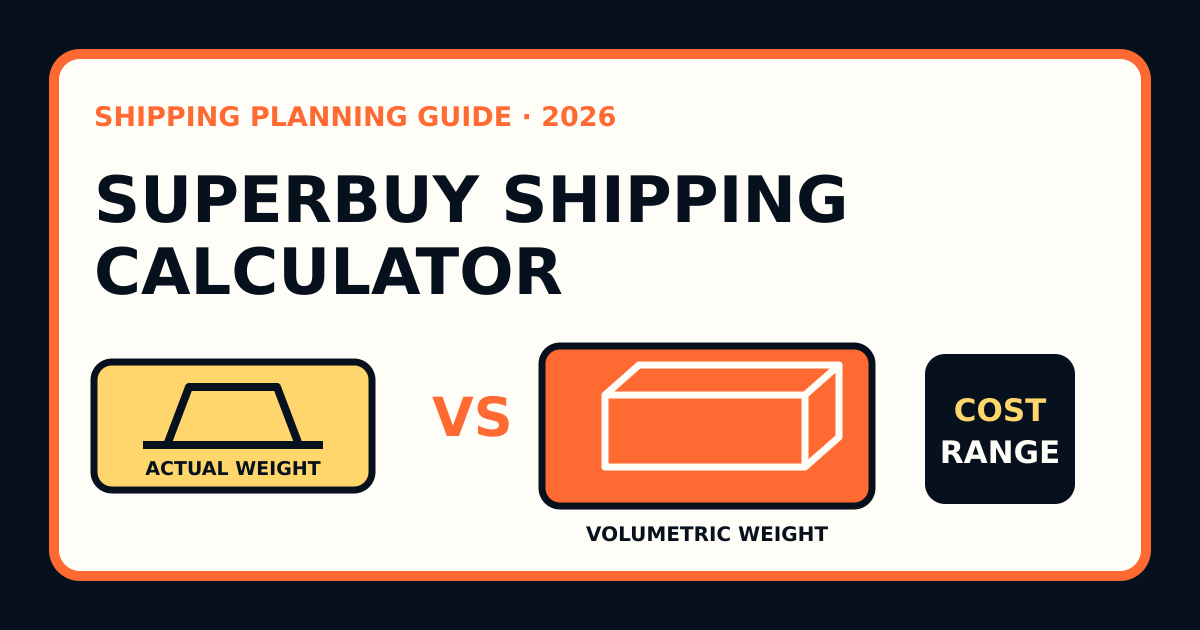
Build a credible cost range from weight, dimensions, packaging, eligibility and final settlement.
It shortens product discovery, but a useful sheet must also tell you what to verify before the agent buys, what to inspect at the warehouse and what assumptions still affect the final delivered cost.
Use the sheet to reach the product page, then confirm the listing is active and the shown price belongs to the variation you actually want.
Seller, option, price and date are observable. Quality labels are judgments until warehouse photos, measurements and current seller information support them.
Record the chosen variation, domestic freight, QC result, return deadline, warehouse weight and parcel assignment so every later decision remains traceable.
Practical guidance from product verification through warehouse decisions, parcel submission and after-sales records.
Open the live marketplace page instead of relying on a spreadsheet thumbnail. Confirm the seller, selected color, size, material description, quantity, current price and Chinese domestic freight. Check whether the displayed low price belongs to an accessory, deposit or different variation. Save the original URL and a dated screenshot of the option you intend to buy. If the listing uses unclear Chinese labels, put the exact requirement in the order remark rather than expecting the purchasing agent to infer it. Superbuy buys according to the submitted instruction, while product risks from third-party sellers remain separate. A five-minute verification before payment is usually easier than resolving the wrong version after it reaches the warehouse.
Treat the purchase and the international parcel as two connected budgets. The first payment normally covers the product and Chinese domestic delivery to the warehouse. The second is made after eligible items are selected for a parcel and covers international shipping, with the initial amount calculated from estimated weight, route and destination. This means the catalog price is not the delivered cost. Before ordering, create a landed-cost range that includes domestic freight, possible optional services, international shipping, payment conversion and a contingency for volumetric weight. A cheap item can become uneconomic when it is bulky, boxed or restricted to expensive routes. If the second-stage estimate would exceed your limit, discover that before the return window narrows.
Pause and compare the change with your saved order evidence. A seller may report that the selected variation is unavailable, that domestic freight is different or that the live price no longer matches an earlier spreadsheet snapshot. Do not approve a substitute based only on a similar title or thumbnail. Ask for the exact replacement URL, option label, size data and total price, then decide whether it still satisfies the original reason for buying. If it does not, cancel before purchase when possible instead of accepting an ambiguous replacement. Keep all material requirements in the order enquiry so there is a dated record. Spreadsheet prices should always be treated as discovery snapshots, not promises that freeze a third-party seller’s inventory or terms.
Begin with rejection conditions, not with the vague question “does it look good?” Check whether the received model, color and quantity match the order. Then inspect overall shape and symmetry before moving around the edges, seams, hardware, prints, labels and included parts in a fixed sequence. Compare visible measurements with both the seller chart and an item that already fits you. Neutral objects in the image can help reveal lighting-related color shifts. Standard warehouse photos document visible condition but cannot prove fabric composition, internal electronics, long-term durability or authenticity. Record an approve, clarify or return decision and the evidence behind it. This creates a repeatable QC process instead of allowing a prominent logo or attractive angle to distract from a structural problem.
Request more evidence only when it can change the decision. High-value requests answer one precise uncertainty: chest width and back length for a jacket, removable insole length for shoes, connector type for electronics, or a close-up of a suspected damaged seam. State the location, angle and measurement endpoints clearly; “check the quality” is too subjective for warehouse staff to interpret. Ask promptly because seller return and exchange windows may continue while you wait. Extra images do not remove every risk, so do not order a large set of random photos. Choose the two or three details most likely to make you keep or reject the item. The goal is not photographic completeness—it is enough reliable evidence to take the next action before the deadline.
Warehouse storage time and the seller’s after-sales window are different clocks. Superbuy currently describes up to 90 days of free storage for purchased items, but that does not extend a seller’s return or exchange deadline. Review QC as soon as the item is stocked, note the last practical day for action and submit questions while the seller can still respond. A return may involve domestic freight or platform-specific conditions, so compare the defect with the likely cost and delay before deciding. Do not leave an unresolved item in storage merely because consolidation is planned later. Once the seller window closes, the choices may narrow even though the item can remain in the warehouse. Your spreadsheet should therefore track both storage expiry and the earlier after-sales decision date.
Consolidate when several compatible items can share packaging and reduce repeated base charges. Split when one bulky, fragile, high-value or restricted item removes useful routes, raises volumetric weight or concentrates too much risk in one parcel. Compare at least two scenarios using estimated chargeable weight: everything together versus a split by size or restriction class. Consider packaging needs as well as price; removing boxes may reduce volume but also reduce protection. Check whether insurance or route limits change as parcel value increases. The best answer is not automatically the fewest parcels. It is the arrangement that balances cost, route eligibility, protection, customs exposure and loss concentration for your destination. Recalculate after warehouse weights and dimensions replace your earlier product-level assumptions.
Actual weight is measured on a scale; volumetric weight converts the space a parcel occupies into a billable equivalent. Depending on the route, the carrier may charge using the higher figure. That is why a light pair of shoes in a large retail box can cost more to ship than a denser item with the same scale weight. Before ordering, estimate category weight and package size separately. At the warehouse, replace estimates with recorded weights and consider how box removal, folding or reinforcement changes dimensions and protection. Superbuy’s international shipping deposit is an estimate based on parcel information, route and destination; the final amount follows the verified package size and weight. Use a range until those measurements exist rather than presenting one early number as guaranteed.
Route availability belongs to the actual parcel, not to a generic spreadsheet recommendation. Batteries, liquids, cosmetics, food, magnetic items, oversized goods and some branded products may be classified differently by warehouses and carriers. Destination-country customs rules can further change what is acceptable, taxable or exposed to seizure. Review the routes displayed for the stocked goods and read the current restrictions before paying; another buyer’s old screenshot may not apply to your destination or item mix. Never misdescribe contents to force an ineligible route. If one item blocks most suitable options, compare a separate parcel or decide whether returning it is more rational. International delivery is performed by third-party logistics providers, so delays, taxes and customs outcomes cannot be removed by the shopping agent.
Keep the original product URL, seller, ordered variation, price, domestic freight, order remarks, warehouse weight, QC photos, measurement requests, approval decision and return deadline. For the parcel, save the selected route, declared information, packaging requests, submitted weight and dimensions, shipping deposit, final adjustment and tracking number. When the parcel arrives, photograph the unopened outer packaging if damage is visible, then compare the contents with the approved warehouse evidence. Retain labels and packaging until quantities and condition are confirmed. If after-sales support is needed, a dated chain from listing to delivery is more useful than a general complaint because it shows exactly where the result diverged from the approved order. Close the record only after delivery, cost and outcome are reconciled.